
The AuraSups Journal · Creatine and the brain
Creatine isn’t just for muscles: 5 things research says about your brain
It’s famous for strength. But scientists are also studying what creatine does upstairs. Here’s what early research shows, and what it doesn’t.

You know the days. Short sleep, a long to-do list, and by mid-afternoon you’ve walked into a room and forgotten why. Coffee helps, sort of. So it’s no surprise researchers are curious about anything that might support the brain’s energy supply. Creatine is one of the more interesting candidates.
Your brain runs on creatine too

Creatine isn’t only stored in muscle. It’s an essential compound in the brain, where it helps recycle cellular energy, especially when demand spikes.1 Your brain is a small organ with a big energy bill, and creatine is part of the system that helps keep the supply steady.
Brain creatine levels also seem to vary with age, diet and lifestyle.2
Early studies point to memory
The same analysis found no significant improvement in overall cognitive function or in executive function. Interestingly, the benefits looked larger in some subgroups, including women.3 An earlier systematic review also concluded that creatine may improve short-term memory and reasoning in healthy people, while results for other areas were mixed.1
It’s most interesting when you’re running on empty
In a 2024 study, people kept awake overnight were given a single, very large dose of creatine (0.35 g per kg of body weight, many times a normal daily serve). Their cognitive performance and processing speed held up better than with a placebo, and brain scans showed changes in energy metabolism.4

A lab experiment with a very high dose, not a fix for a bad night.
That’s a far higher dose than anyone takes day-to-day. It does help explain why researchers think creatine may matter most when the brain is under stress.1
Women, older adults and vegetarians are the groups to watch

In the 2018 review, vegetarians responded better than meat-eaters on memory tasks, and the authors pointed to potential benefits for older and stressed individuals.1
A 2021 review on women’s health suggests creatine may be even more effective for women by supporting energy in the brain.2 A 2025 review of older adults lists cognition and memory among the areas where research is accumulating.5
The honest part: the brain research is still early

In 2024, the European Food Safety Authority reviewed the evidence and concluded that a cause-and-effect relationship between creatine and improved cognitive function has not been established.6 Many studies are small, use high doses or test short periods.
So here’s where the evidence actually stands: creatine’s best-established benefit is for muscle strength and performance with regular resistance exercise.* The brain research is a promising area to watch, and creatine monohydrate is the form used in every trial in that 2024 meta-analysis.3
The short version
- Your brain uses creatine to help recycle energy, just like muscle does.
- Early trials link creatine with better memory and processing speed, with mixed results elsewhere.
- Effects may be larger in women, vegetarians and people under stress.
- The research is promising but early. Strength with training is the proven benefit.*
If you want a simple daily habit
A daily creatine habit you’ll actually keep.
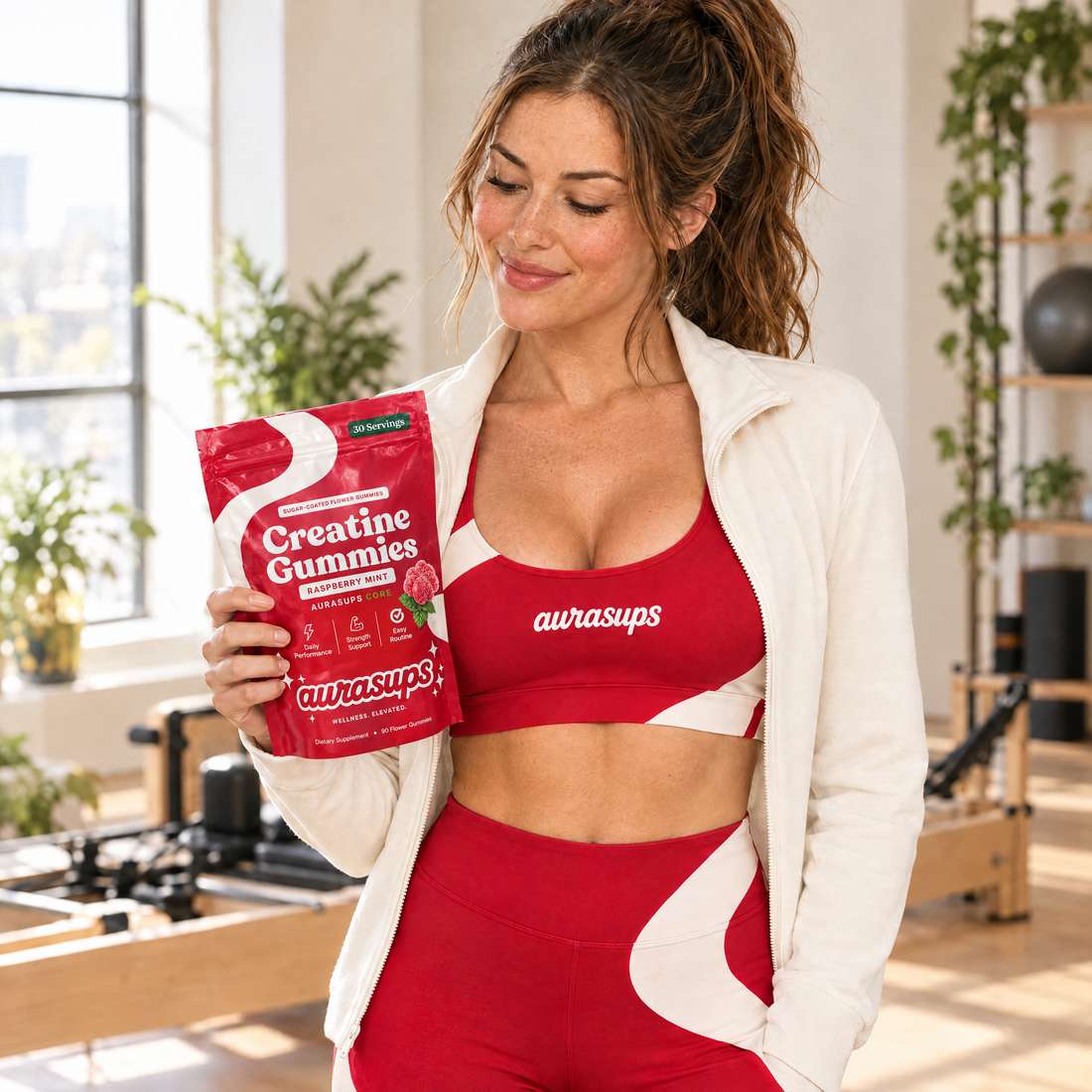
If you’d like to add creatine to your day, CORE makes it three raspberry mint gummies at breakfast.
- 5.55 g creatine monohydrate in three gummies
- 750 mg taurine plus vitamins B6 and B12
- Raspberry first, light mint finish · sugar-coated, vegan-friendly
- 90 gummies per pouch, 30 days
Free shipping · We ship worldwide · One-time purchase, no subscription
Good questions
What sweeteners are in CORE?
Contains maltitol and sucralose. Excess consumption may have a laxative effect.
The supplied nutrition panel does not state a sugars quantity. We do not make a sugar-free or no-added-sugar claim from this label.
When should I take them?
Three gummies a day with breakfast (with food). Take them every day so your creatine stores stay topped up.
How long until it works?
Creatine builds up gradually. At 3–5 g a day, muscle stores rise over about 3–4 weeks.7 Strength benefits appear alongside regular resistance training over weeks to months.* We don’t make claims about cognitive effects, because that research is still early.
Is creatine safe?
Creatine monohydrate is one of the most-studied supplements. The ISSN position stand describes it as safe and well tolerated in healthy people at recommended amounts.7 Talk to your doctor first if you take medication, are pregnant or breastfeeding, or have a kidney condition. If you have ongoing concerns about memory, focus or fatigue, please see your doctor.
References
- Avgerinos KI, Spyrou N, Bougioukas KI, Kapogiannis D. Effects of creatine supplementation on cognitive function of healthy individuals: a systematic review of randomized controlled trials. Exp Gerontol. 2018;108:166–173. PubMed 29704637
- Smith-Ryan AE, Cabre HE, Eckerson JM, Candow DG. Creatine supplementation in women’s health: a lifespan perspective. Nutrients. 2021;13(3):877. PubMed 33800439
- Xu C, Bi S, Zhang W, Luo L. The effects of creatine supplementation on cognitive function in adults: a systematic review and meta-analysis. Front Nutr. 2024;11:1424972. PubMed 39070254
- Gordji-Nejad A, Matusch A, Kleedörfer S, et al. Single dose creatine improves cognitive performance and induces changes in cerebral high energy phosphates during sleep deprivation. Sci Rep. 2024;14(1):4937. PubMed 38418482
- Candow DG, Ostojic SM, Chilibeck PD, et al. Creatine monohydrate supplementation for older adults and clinical populations. J Int Soc Sports Nutr. 2025;22(sup1):2534130. PubMed 40673730
- EFSA Panel on Nutrition, Novel Foods and Food Allergens (NDA). Creatine and improvement in cognitive function: evaluation of a health claim pursuant to Article 13(5) of Regulation (EC) No 1924/2006. EFSA J. 2024;22(11):e9100. PubMed 39564533
- Kreider RB, Kalman DS, Antonio J, et al. International Society of Sports Nutrition position stand: safety and efficacy of creatine supplementation in exercise, sport, and medicine. J Int Soc Sports Nutr. 2017;14:18. PubMed 28615996