
The AuraSups Journal · Muscle and GLP-1s
6 things to know about protecting your muscle on a GLP-1
GLP-1 medicines move the scale. Here’s what the research says about the part of weight loss the scale doesn’t show: muscle.

GLP-1 medicines have changed weight loss for millions of women. They also come with a quieter question that’s worth asking early: how much of the weight lost is fat, and how much is muscle?
Not all the weight lost is fat
In the SURMOUNT-1 tirzepatide trial’s scan substudy, roughly a quarter of the weight lost was lean tissue.3,4
Some context, because it matters: “lean mass” isn’t all muscle. It also includes water, organs and other non-fat tissue. Experts estimate muscle makes up around half of it.2 Losing some lean mass is expected with any significant weight loss. The goal is to protect as much muscle and strength as possible.
That’s exactly why experts are talking about muscle
In 2025, four US obesity and nutrition organisations published a joint advisory on supporting GLP-1 therapy. It lists muscle and bone loss among the main challenges, and recommends preserving muscle and bone through resistance training and an appropriate diet.2
Ask for a strength and body-composition check when treatment starts.
The advisory suggests checking muscle strength, function and body composition at the start of treatment. It’s a good question to bring to an appointment.
Protein matters more when you’re eating less

When appetite shrinks, protein is often the first thing to slip. The advisory notes the standard recommendation of 0.8 g per kg of body weight a day, and that higher targets, such as 1.2–1.6 g/kg/day, have been proposed during active weight loss.2
- Start meals with the protein (eggs, fish, chicken, tofu, Greek yoghurt, legumes).
- Spread it across the day instead of saving it for dinner.
- Ask a doctor or dietitian what target suits you.
Lifting is the non-negotiable
Of everything you can do, resistance training has the strongest case for protecting muscle during weight loss.2,5 Two or three short sessions a week is a realistic place to start: squats to a chair, wall push-ups, bands, light dumbbells or a guided strength class.

Creatine is on researchers’ radar, but it’s early
A 2026 review of strategies to preserve lean mass during GLP-1 treatment describes creatine monohydrate as having “one of the stronger indirect evidence bases” among muscle-focused supplements. It also notes the evidence is not GLP-1-specific.5
Most of that evidence comes from older adults. When they combined creatine with resistance training, they gained more lean tissue and strength than with training alone.6*
The honest version: as of 2026, no randomised clinical trial has directly tested creatine during GLP-1 medication weight loss.8 Creatine is a supporting act for training and protein, not a replacement for them, and not something to start without checking with your prescriber.
Smaller appetite? Keep the habit small too
Creatine works by building up in your muscles with daily use: 3–5 g a day raises stores over roughly 3–4 weeks.7 So whatever you choose has to be easy to stick with.
On days when big meals and big drinks feel like a lot, small habits win. Pair anything new with a meal you already eat, and keep it simple enough to do every day.


The short version
- A meaningful share of GLP-1 weight loss can be lean mass.
- Protein at every meal and resistance training are the first line of defence.
- Creatine has good indirect evidence alongside training, but no GLP-1 trials yet.*
- Check with your prescriber before adding any supplement.
If you want a simple daily habit
Keep the strength you’ve built.*
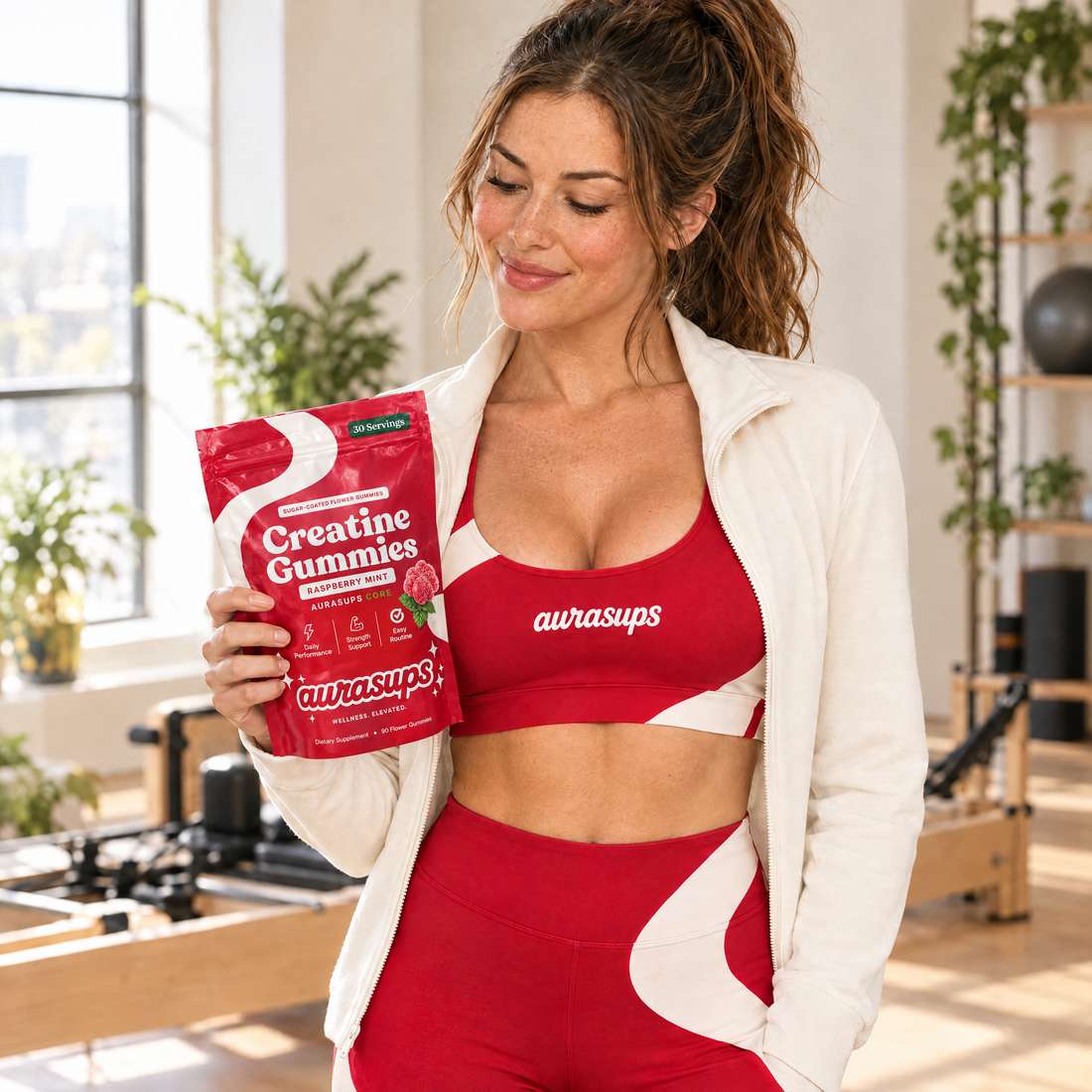
If your prescriber is happy for you to add creatine, CORE keeps it small: three raspberry mint gummies at breakfast. Check the nutrition panel if you’re watching sugar.
- 5.55 g creatine monohydrate in three gummies
- 750 mg taurine plus vitamins B6 and B12
- Raspberry first, light mint finish · sugar-coated, vegan-friendly
- 90 gummies per pouch, 30 days
Free shipping · We ship worldwide · One-time purchase, no subscription
Fair questions
Can I take CORE with a GLP-1 medicine?
Please ask your prescriber first. No randomised trial has yet tested creatine together with GLP-1 medicines,8 and CORE is not designed to change how a medicine works or how much weight is lost.
What sweeteners are in CORE?
Contains maltitol and sucralose. Excess consumption may have a laxative effect.
The supplied nutrition panel does not state a sugars quantity. We do not make a sugar-free or no-added-sugar claim from this label.
When should I take them, and how long until it works?
Three gummies a day with breakfast (with food), every day. Creatine stores build gradually over about 3–4 weeks at 3–5 g a day.7 Strength benefits in studies come alongside regular resistance training over weeks to months.*
Is creatine safe?
Creatine monohydrate is one of the most-studied supplements. The ISSN position stand describes it as safe and well tolerated in healthy people at recommended amounts.7 Talk to your doctor first if you take medication (including GLP-1s), are pregnant or breastfeeding, or have a kidney condition.
References
- Wilding JPH, Batterham RL, Calanna S, et al. Once-weekly semaglutide in adults with overweight or obesity (STEP 1). N Engl J Med. 2021;384(11):989–1002. PubMed 33567185
- Mozaffarian D, Agarwal M, Aggarwal M, et al. Nutritional priorities to support GLP-1 therapy for obesity: a joint Advisory from the American College of Lifestyle Medicine, the American Society for Nutrition, the Obesity Medicine Association, and The Obesity Society. Obesity (Silver Spring). 2025;33(8):1475–1503. PubMed 40445127
- Jastreboff AM, Aronne LJ, Ahmad NN, et al. Tirzepatide once weekly for the treatment of obesity (SURMOUNT-1). N Engl J Med. 2022;387(3):205–216. PubMed 35658024
- Look M, Dunn JP, Kushner RF, et al. Body composition changes during weight reduction with tirzepatide in the SURMOUNT-1 study of adults with obesity or overweight. Diabetes Obes Metab. 2025;27(5):2720–2729. PubMed 39996356
- Šantić R, Martinović L, Pavlović N, et al. Lean mass and musculoskeletal preservation in GLP-1-based obesity treatment: nutrition, exercise, supplementation, and monitoring strategies. Metabolites. 2026;16(6):364. PubMed 42346344
- Chilibeck PD, Kaviani M, Candow DG, Zello GA. Effect of creatine supplementation during resistance training on lean tissue mass and muscular strength in older adults: a meta-analysis. Open Access J Sports Med. 2017;8:213–226. PubMed 29138605
- Kreider RB, Kalman DS, Antonio J, et al. International Society of Sports Nutrition position stand: safety and efficacy of creatine supplementation in exercise, sport, and medicine. J Int Soc Sports Nutr. 2017;14:18. PubMed 28615996
- Ostojic SM, Galyean S. Creatine for glucagon-like peptide-1-associated muscle loss. Clin Nutr. 2026;66:106805. PubMed 42800365